Summary
- The Anatomy of British Heritage Layering: Balancing Texture, Weight, and Weather Resistance
- Structured Waxed Outerwear and Tailored Tweed Foundations
- Substantial Knitwear and Coarse Wool Counterpoints
- Equestrian Lines and Multi-Gauge Ensembles
- Fabric Weight Hierarchy Matrix: Calibrating Oiled Canvas, Houndstooth Wool, and Ribbed Knits
- Maintenance and Friction Pitfalls: Preserving Wax Proofing and Heritage Tweed
- Curated Layering Verdict: Assembling a Functional Autumn Country Wardrobe
The Anatomy of British Heritage Layering: Balancing Texture, Weight, and Weather Resistance
Mastering fall layering principles requires managing damp cold without accumulating stiff bulk. True british heritage fashion relies on strategic density, placing water-shedding oiled canvas over carded wool and breathable base knits. This functional hierarchy delivers reliable autumn weather layering through natural fabric weights, keeping your movement fluid while executing authentic classic country styling across brisk field conditions.
Structured Waxed Outerwear and Tailored Tweed Foundations
Pairing a dense weatherproof shell over tailored wool demands exact proportions at every seam. When building an effective waxed jacket and blazer combination, ensure the outerwear shoulder drops roughly half an inch beyond your jacket shoulder pad to prevent tension across the upper back. Sleeve cuffs require equal precision, with the outer utility sleeve extending past the tweed wrist hem by a full inch to seal out wind and horizontal drizzle during tailored country layering.
Keep your jacket collar stand at least a quarter inch lower than the corduroy outerwear collar to eliminate neck bunching and maintain clean tweed outerwear styling lines throughout wet weather walks.
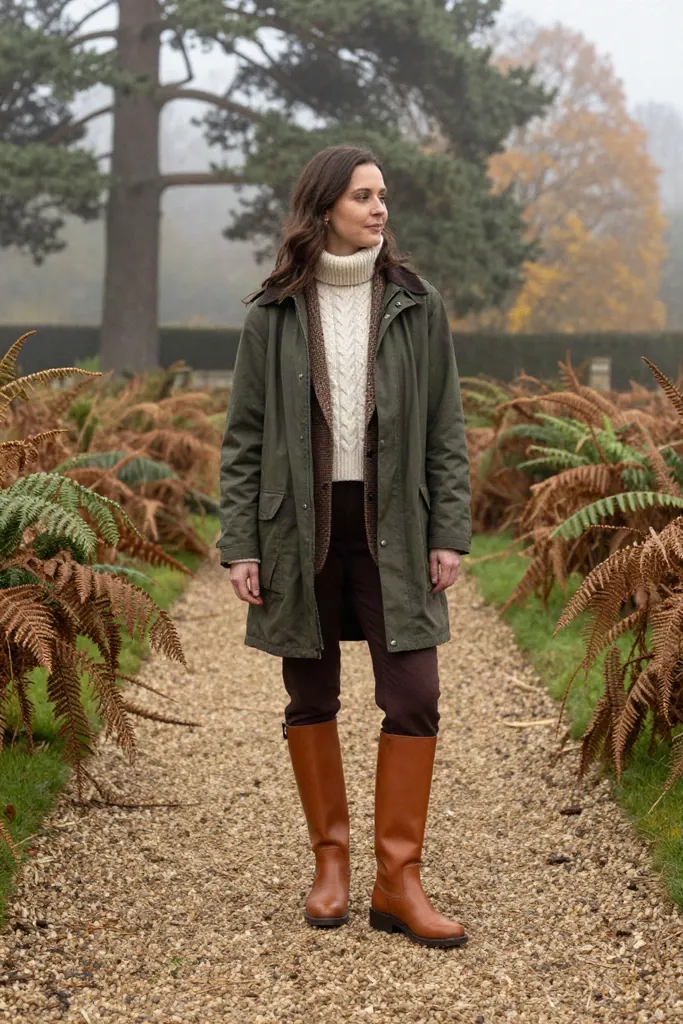
The Field Utility Baseline: Olive Waxed Jacket over Houndstooth Blazer and Fisherman Knit
This core field ensemble establishes dependable thermal performance by pairing dense canvas with lofty knit ribs. Building a balanced olive waxed jacket outfit starts with managing heat dissipation, keeping the outer storm placket open so moisture escapes freely while preserving clean vertical lines across your torso.
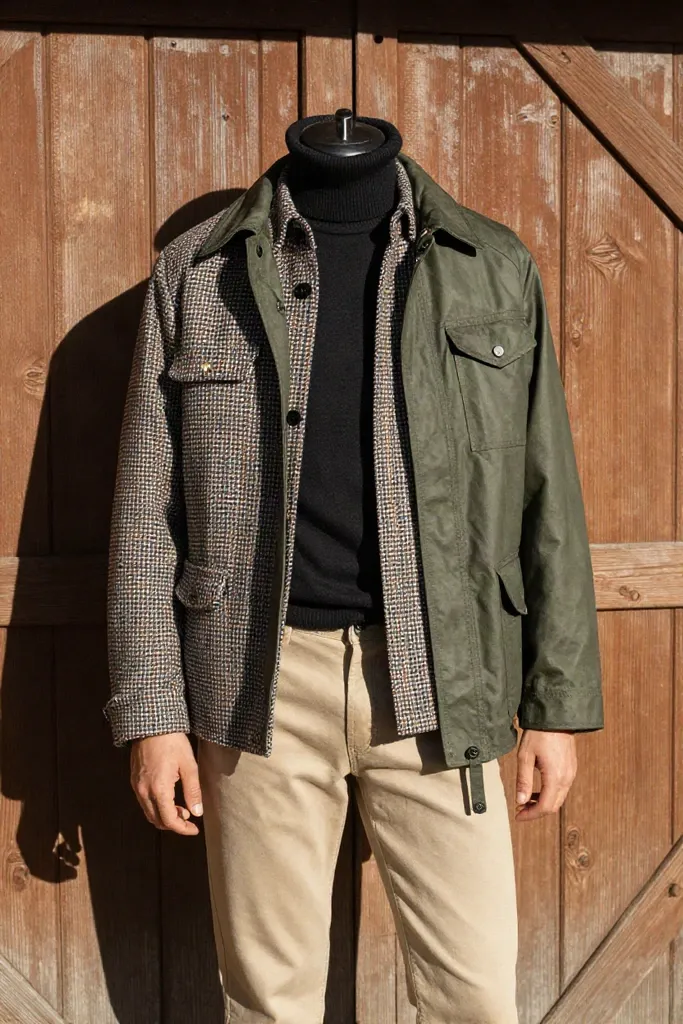
- Combine a 6oz Sylkoil shell with a 420 gsm chocolate houndstooth blazer layering piece, leaving the buttons undone to expose the textured wool lapels.
- Base the core with a dense 5-gauge fisherman sweater styling foundation in natural unbleached yarn, creating thermal traps that retain body heat without stifling airflow.
- Anchor the substantial upper volume with tall cognac leather boots, creating a balanced riding boots outfit fall profile that resists damp brush and paddock mud.
Secure slim moleskin trousers directly into the leather boot shafts to keep your lower silhouette streamlined and shield inner fabrics from damp ground debris.
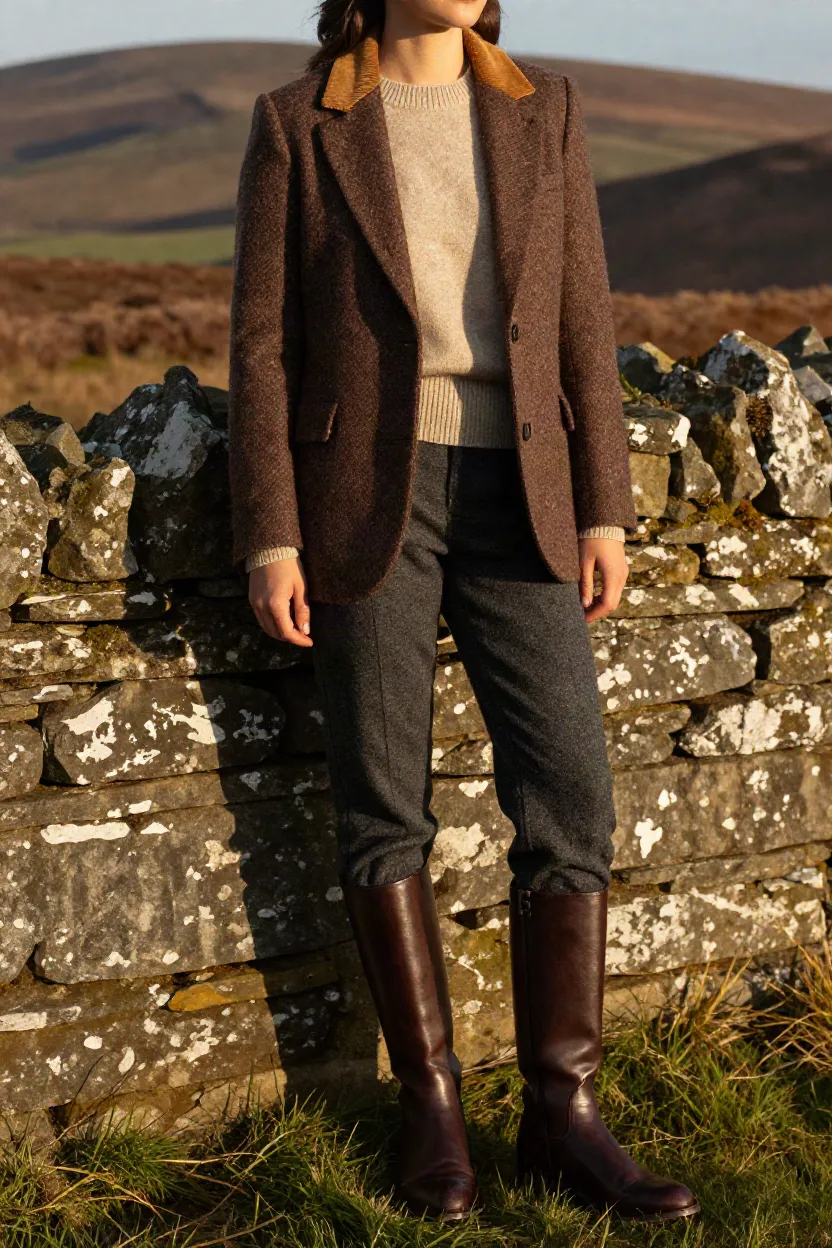
The Country Tailoring Anchor: Chocolate Shetland Tweed with Amber Corduroy Accents
A structured wool jacket serves as your primary thermal layer when transitioning between estate grounds and indoor spaces. Grounding your wardrobe with a 450 gsm shetland tweed blazer balances rugged weather defense with crisp tailoring, relying on tactical fabric placements to eliminate skin irritation.
- Turn up the amber 12-wale corduroy collar jacket neckband against sudden wind, allowing the soft ribbed cotton to block coarse wool friction along your neck.
- Balance the 3.5-inch notch lapel with a fine oatmeal ribbed knit top, providing a smooth base that respects country tailoring women standards without adding midsection bulk.
- Finish your flannel trousers styling by tucking the tapered charcoal hems cleanly into oxblood leather field boots for dependable puddle clearance.
This tailored assembly keeps your stride unrestricted across rough terrain while maintaining sharp, functional lines throughout the afternoon.
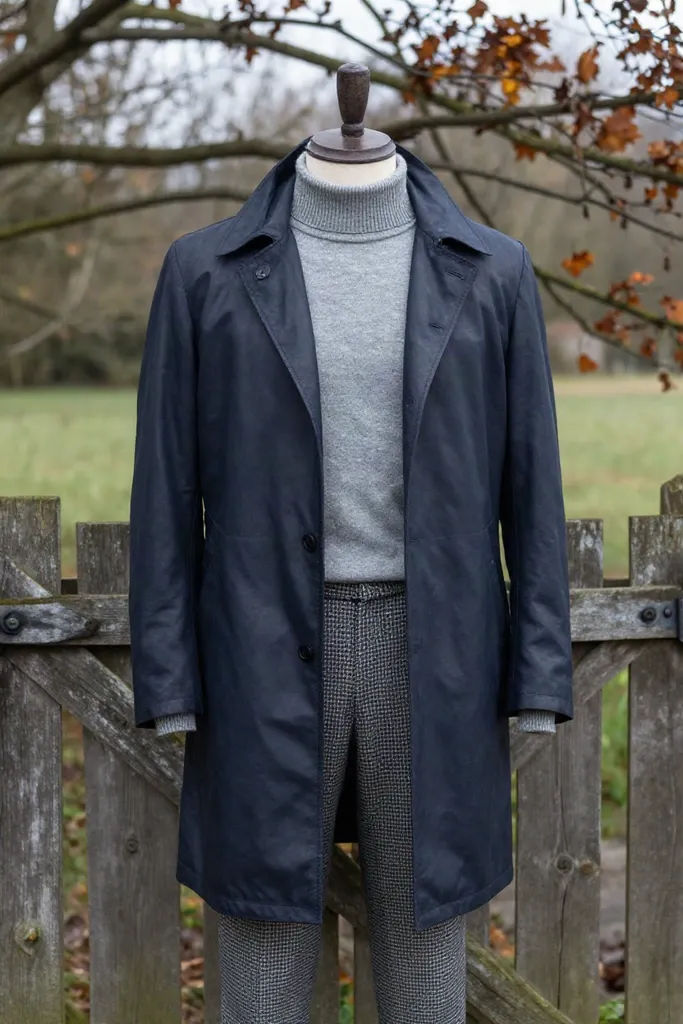
The Town-to-Country Silhouette: Navy Oiled Barn Coat over Dense 7-Gauge Ribbed Mockneck
Switching from heavy earth tones to deeper maritime shades creates a balanced town to country style that functions equally well on city pavement and gravel paths. Layering an open 8oz navy oiled cotton barn jacket over a slate grey 7-gauge merino mockneck sweater gives you immediate temperature control without sacrificing weather resistance. Pair this top half with tailored houndstooth wool trousers to ground the navy barn coat outfit in crisp sporting traditions. For the cleanest sleeve clearance, ensure roughly half an inch of the ribbed knit extends past the jacket cuffs, breaking up the dark outer shell while guarding your wrists against brisk winds.
Dry-wax cotton offers a clear practical advantage for this combination. I find that unwashed dry-wax fabric eliminates the oily residue that often transfers onto delicate wool surfaces, keeping your ribbed mockneck layering pristine throughout long commutes. This heritage casual look handles variable autumn drizzle without feeling stifling once you step indoors, making it an efficient setup for busy days.
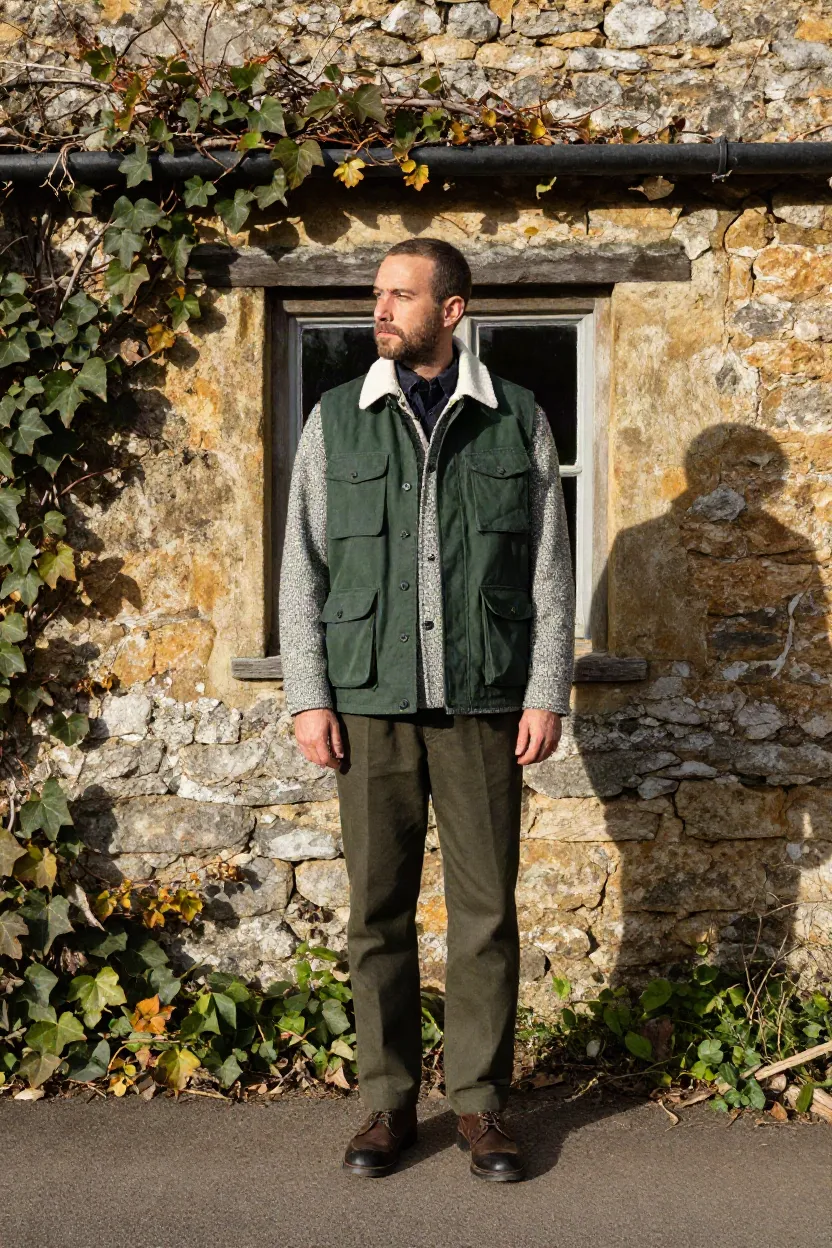
The Micro-Check Gilet: Forest Green Waxed Utility Vest over Windowpane Tweed
Managing your core temperature during shifting autumn weather demands smart bulk reduction around the arms. Placing a 4oz lightweight waxed gilet directly over a 380 gsm windowpane tweed jacket protects your chest from sudden downpours while granting your shoulders full range of movement.
- Sleeve bulk reduction prevents tight armhole binding, allowing the heavy tweed jacket sleeves to drape naturally as you walk.
- A crisp ecru cotton poplin shirt collar creates a clean, matte barrier at the neck against textured wool and hunting green outerwear.
- Targeted water repellency across the chest preserves the tweed underneath without adding unnecessary weight to your arms.
This vest over blazer layering approach turns a traditional tweed jacket into a resilient field companion, ensuring your waxed gilet outfit delivers dependable thermal core protection throughout damp mornings.
Substantial Knitwear and Coarse Wool Counterpoints
Pairing thick knitwear with dense tweed requires careful adjustment of jacket proportions to prevent bunching around the torso. Placing high-relief cable patterns and carded yarns underneath dry-woven outerwear delivers excellent insulation, provided your tailoring allows enough interior volume to maintain a clean drape.
- Check the jacket armholes and chest ease allowances, verifying that your tweed provides at least two extra inches of circumference compared to your summer suits.
- Examine the shoulder seams and sleeve pitch in a mirror, ensuring the jacket fabric falls smoothly over the knitwear without pulling across the upper back.
- Select carded wool or dry-spun yarns for your sweater base to prevent unwanted bunching beneath the coarse coat lining.
This structured approach to heavy knitwear combinations ensures that cable knit layering remains comfortable during long walks, while refined textured wool styling preserves sharp lines from collar to hem.
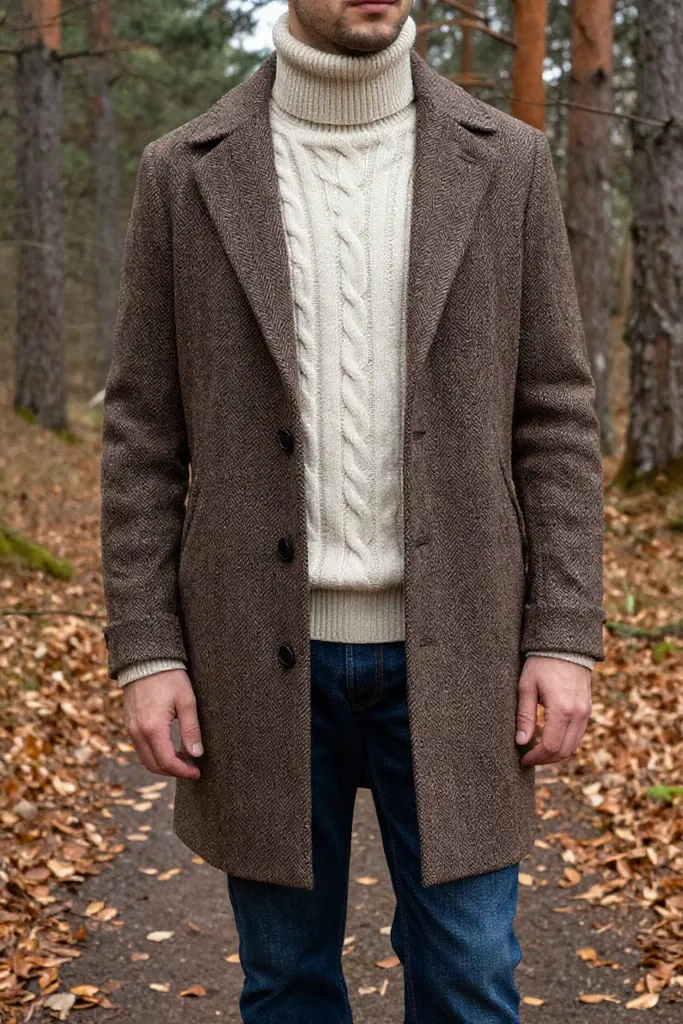
The Cable-Knit Thermal Core: Heavy Cream Aran Turtleneck beneath Herringbone Field Tweed
A substantial 5-gauge cream Aran sweater forms an impenetrable thermal foundation when temperatures drop into single digits. Pairing this dimensional rope-twist knit with a 500 gsm Scottish herringbone field coat balances rustic countryside charm with rugged outdoor performance. To accommodate the thick cables without restricting your movement, your outer coat requires an 18-inch armhole circumference. That extra clearance stops the bulky knit from pinching in the armpits or lifting the coat hem whenever you reach forward.
Straight-leg selvedge denim provides the ideal modern base to anchor this traditional upper half. The stiff, clean weave of dark raw denim balances the pronounced textures above, bringing practical durability to your aran cable knit outfit. This blend of chunky turtleneck layering and heritage denim styling updates classic herringbone coat styling for daily wear, ensuring you stay warm across both open countryside and city streets.
The Muted Fleck Profile: Charcoal Donegal Tweed over Slate Merino and Moleskin
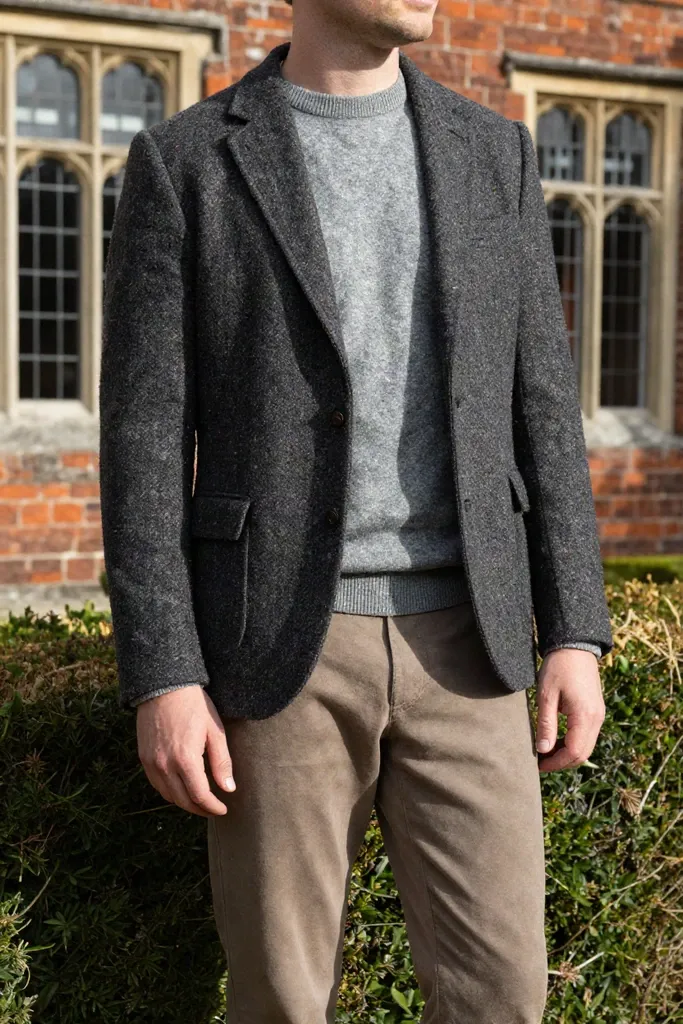
Shifting away from high-contrast color combinations allows tactile weave structures to carry your outfit. Assembling a coherent monochrome heritage look relies on slight tonal shifts between deep charcoal, slate, and taupe to create depth without visual noise.
- Start with a lightweight base by pulling on a 200 gsm slate merino crewneck. This fine knit provides steady insulation without excess bulk, making slate knitwear layering smooth against the skin.
- Slide into a 400 gsm charcoal donegal tweed jacket flecked with subtle ochre neps. Ensure the jacket features a full cupro lining, which creates a slick internal barrier that prevents abrasive carded tweed yarns from catching or pilling your delicate merino fibers.
- Complete the lower half with a tailored moleskin trousers outfit in brushed taupe. Dense cotton moleskin cuts through bitter autumn winds as effectively as heavy denim, yet its soft brushed surface drapes smoothly without stiff tension lines across your thighs.
Keep your accessories minimal in matte black pebble leather to let the yarn flecks provide the primary visual detail.
The Gun Check Defense: Hazelnut Wool Blazer with Removable Waxed Storm Cape
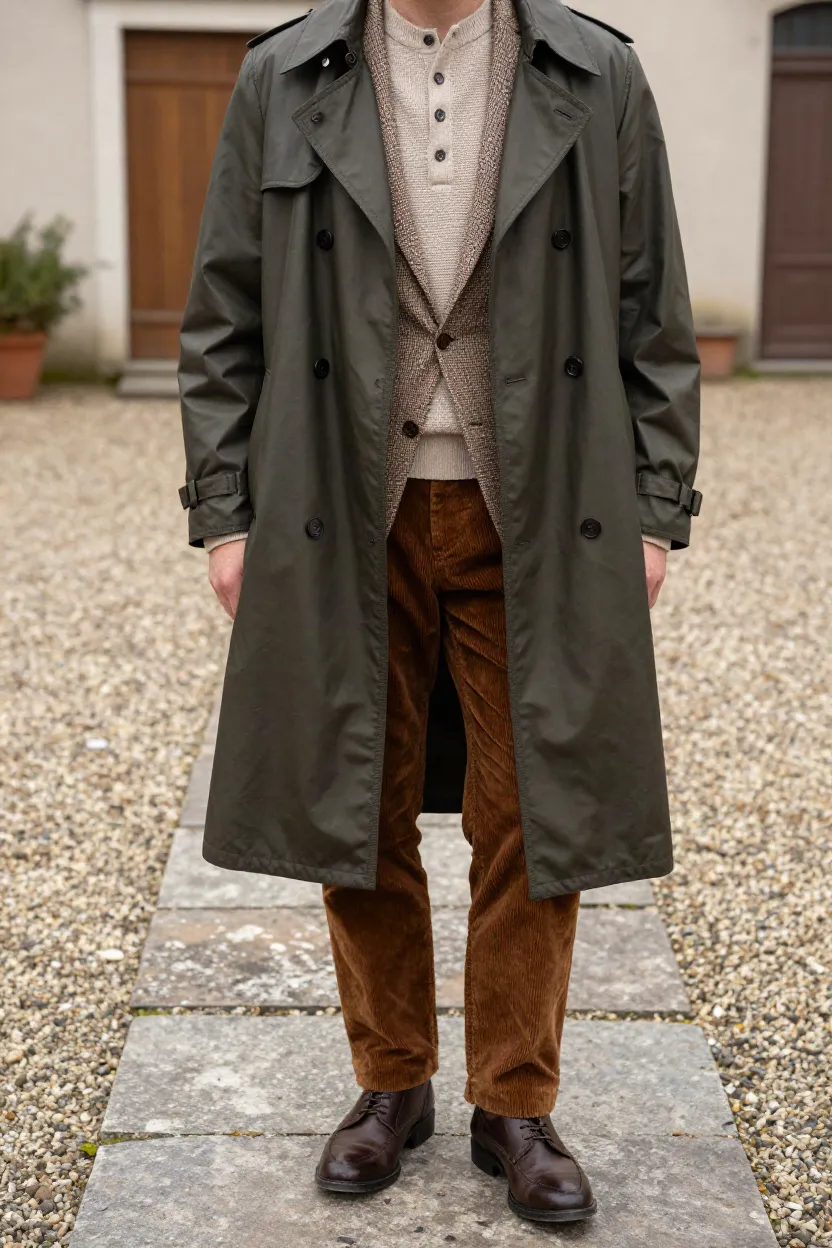
Sudden autumn squalls demand adaptable wet-weather defense that does not compromise traditional tailoring. A well-fitted gun check blazer look built from 420 gsm hazelnut wool gives you natural thermal protection, but repeated downpours will eventually soak through exposed lapels. Securing an unlined 6oz waxed storm cape over your shoulders solves this vulnerability instantly. The treated cotton drapes naturally over the wool, channeling rain runoff cleanly past your upper body while preserving the crisp, sharp canvas construction in your blazer shoulders.
Beneath the jacket, a waffle-knit cotton crewneck shirt offers breathable thermal regulation when you head indoors and shed the outer layer. Balance the earth tones downstairs by turning to heavy corduroy pants styling in rich tobacco. Thick eight-wale corduroy resists damp vegetation around the ankles, bringing rugged utility to your country outerwear layering while grounding the graphic geometry of the hazelnut check up top.
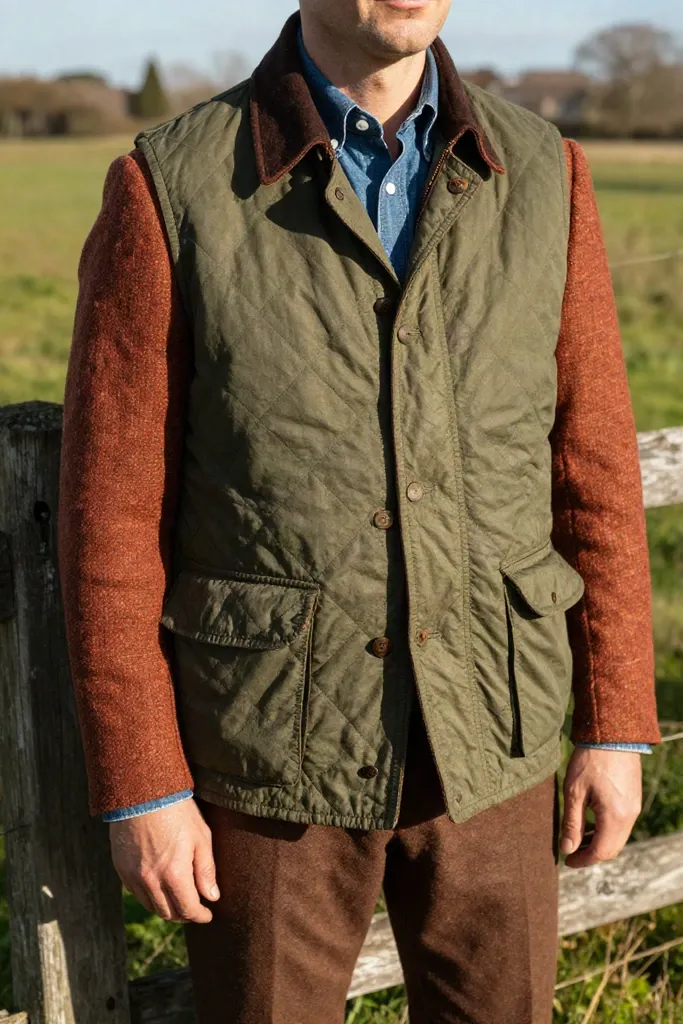
The Low-Profile Mid-Layer: Quilted Wax Vest Sandwiched between Harris Tweed and Chambray
Mastering cold-weather comfort often comes down to inserting an insulating buffer that blocks wind without blowing out your silhouette. A practical three-tier layering strategy lets you pair tailored wool with weatherproof materials while maintaining a trim waistline.
- Foundation base: A washed 5oz cotton chambray shirt heritage piece provides a breathable, moisture-wicking barrier that feels comfortable against the skin all day.
- Torso insulation: Slip a diamond-quilted vest under blazer tailoring, selecting a 4oz waxed cotton exterior with flat synthetic batting under 60 gsm. This low-profile fill traps core body heat efficiently without forcing open the jacket waist button.
- Outer defense: Fasten a 480 gsm rust Harris tweed sport coat over the vest. Coarse Cheviot wool yarns create wind baffles, and matte horn buttons anchor the overall rustic quality against the smooth sheen of proofed cotton canvas.
Stick with a low stand collar on the vest so your tailored lapels lay flat against the chest without bunching at the neck.
The Structured Hacking Line: Brown Glen Plaid Jacket with Moss Cable Waistcoat
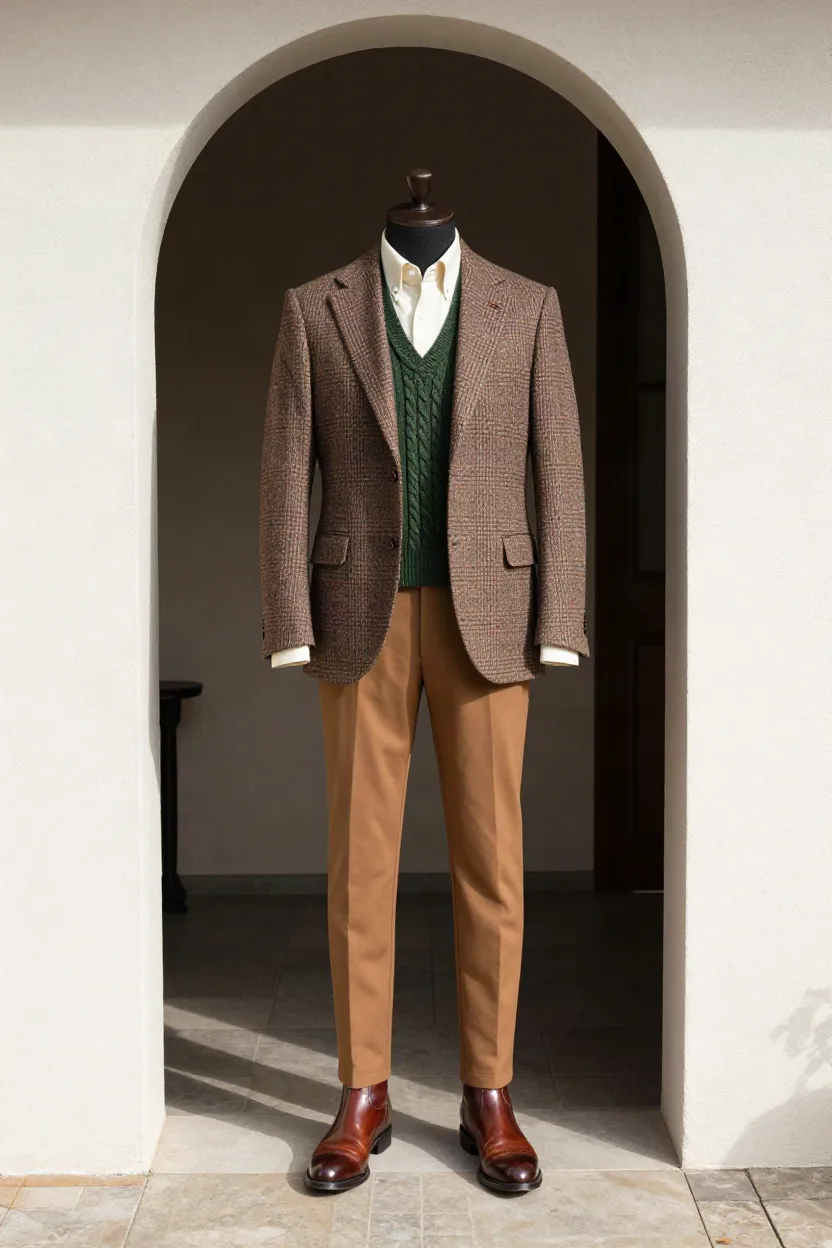
Traditional riding attire excels at maintaining functional mobility while presenting clean vertical balance. Pulling together an authentic equestrian style outfit requires calculated length proportions between your tailored outerwear and knitted mid-layers.
- Tuck an ecru cotton poplin shirt neatly into high-rise twill trousers, leaving the stiff collar upright to frame your neck.
- Button a textured cable knit waistcoat in moss green directly over the shirting. Position the bottom hem so it sits right across your natural beltline without exposing shirt fabric underneath.
- Layer on a 360 gsm brown glen plaid hacking jacket, making sure the rear flared skirt drops roughly 2 inches below the bottom of your knit waistcoat to maintain classic riding proportions.
- Step into polished tall cognac boots. Stiff leather shafts protect your lower legs from wet brush and gravel paths while establishing a clean line from the calf to the ground.
Check your rear jacket vents in a mirror before heading out to ensure the side pleats remain flat over your hips.
Equestrian Lines and Multi-Gauge Ensembles
Long coats designed for riding and brisk countryside walking demand deliberate weight distribution, especially when you step out into shifting autumn winds. Pairing extended hem drops with textured, multi gauge knitwear keeps your torso warm without trapping damp heat or restricting your stride through open fields. When you build this functional look, three core elements ensure your layers move naturally as you walk:
- Maintain clean proportions by selecting an equestrian silhouette coat with a deep rear walking gusset, which allows the hem to drape freely over tall boots without pulling across your thighs.
- Anchor the midsection with mid-weight geometric knit patterns, positioning smaller checks or ribs beneath the chest to prevent heavy yarns from bunching under your armholes.
- Practice sensible longline outerwear styling by unfastening the bottom two buttons of your coat, creating instant lower hem ventilation that expels heat during sustained hill climbs.
This balanced configuration keeps wind chill off your legs while preventing heavy knit layers from feeling bulky across your chest.
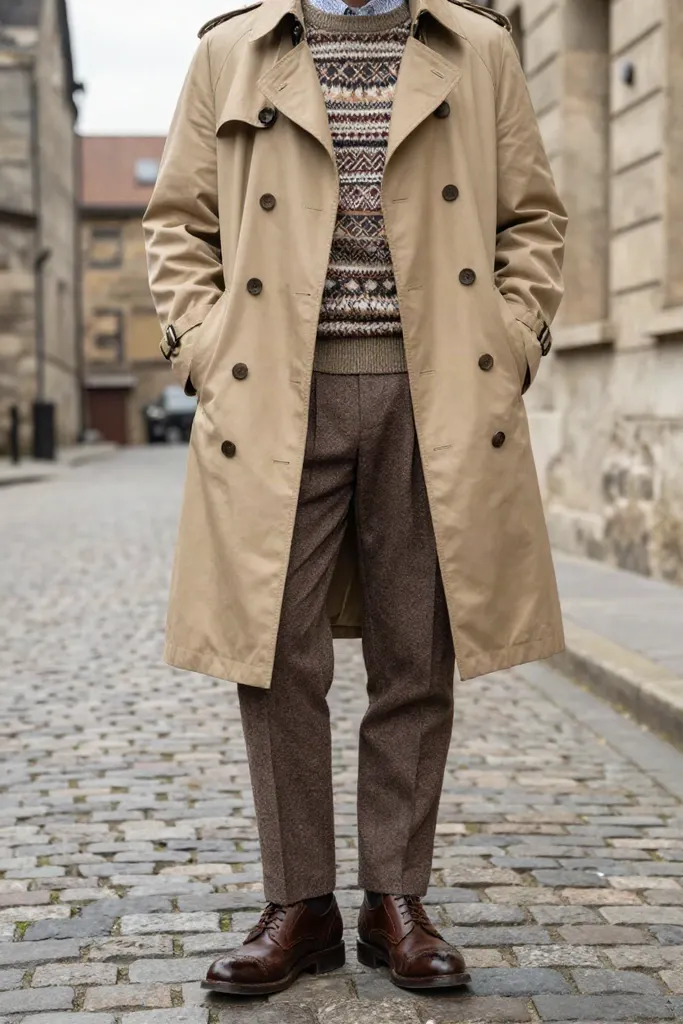
The Storm-Ready Trench: Heavyweight Waxed Khaki Trench over Fair Isle Wool
Persistent autumn downpours call for reliable outer proofing that shields intricate woolen patterns beneath without smothering you in perspiration. A double-breasted 10oz waxed trench coat provides the necessary water repellency while offering generous lapel coverage across your upper torso. Assemble this weather-resistant look through three direct steps:
- Pull on a 320 gsm fair isle sweater outfit over a lightweight cotton undershirt, adjusting the rounded yoke pattern so it sits flat across your collarbones without riding up under the trench collar.
- Fasten your pleated wool trousers at the natural waist, smoothing the front pleats downward so the heavier fabric drapes straight into the tops of your footwear.
- Complete your brogue boots styling by lacing up a pair of heavy pebble-grain ankle boots with storm welts, which grounds the coat's mid-calf hem and grips wet, muddy terrain.
The wide, overlapping lapels channel heavy driving rain away from the exposed knit collar, while the rear storm flap lets interior heat vent naturally across your back.
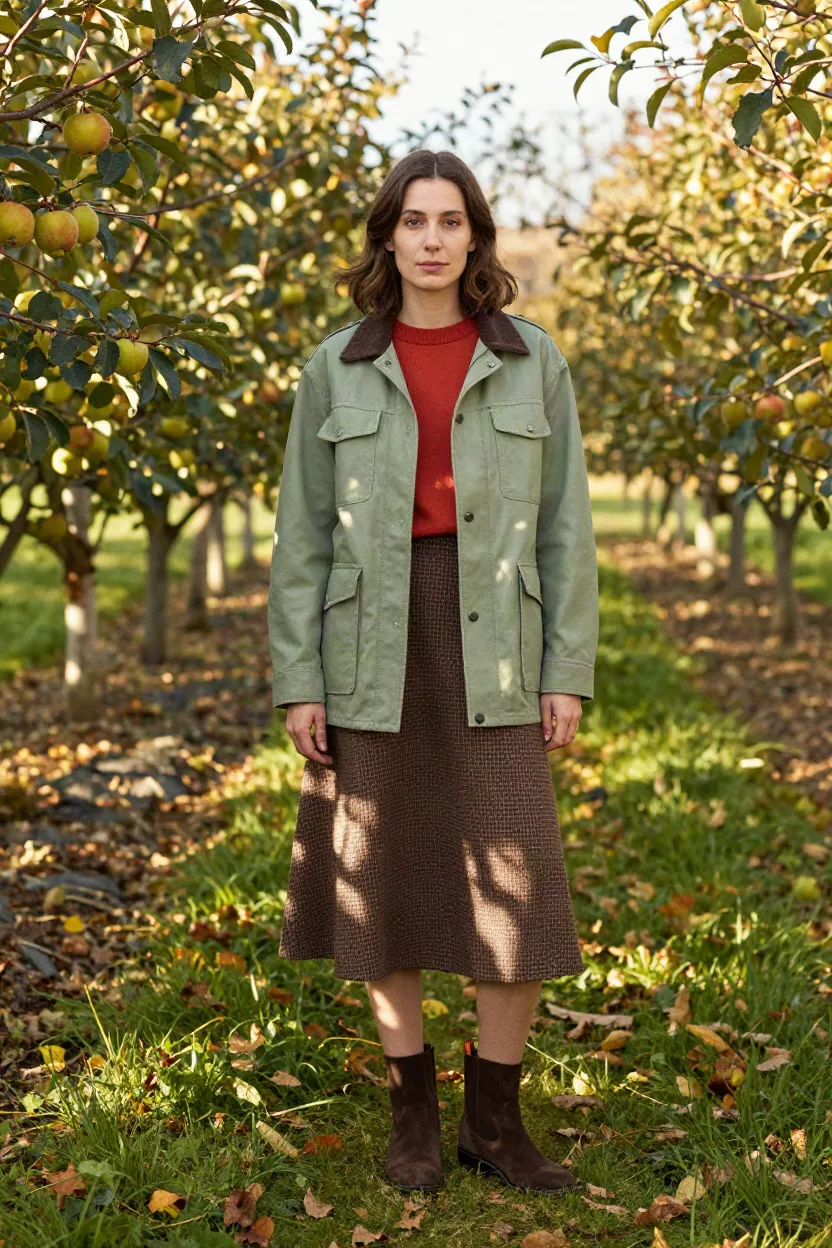
The Earthy Country Contrast: Sage Oiled Field Coat with Brick Red Shetland Knit
Pairing deep greens with rustic autumnal tones creates an immediate visual anchor that feels right at home on country lanes. When assembling this sage field jacket look, slip a 400 gsm shetland crewneck sweater over a crisp cotton collared shirt. Ensure you keep a 1-inch reveal of the shirt collar above the crewneck rim to shield your neck from rough, unbrushed wool fibers. Below the waist, an A-line houndstooth midi skirt adds structured swing that easily clears muddy footwear, producing a balanced combination of rugged field protection and crisp, traditional tailoring.
The real practical benefit of this earth tone layering formula lies in how the garments handle erratic autumn weather. Carded Shetland wool naturally retains lanolin, which allows the sweater to shed light mist if you unbutton the coat while strolling sheltered woodland paths. Once heavier rain sets in, fastening the 6oz thornproof shell provides dependable weather resistance against driving damp, sealing warmth around your core without creating uncomfortable friction along your arms.
The Dual-Wool Texture Clash: Checked Tweed Shacket over Fine Merino and Waxed Cape
Combining coarse outer wool with ultra-fine knitwear creates a dependable barrier against dropping temperatures while keeping your arms free to move. This practical approach to tweed shacket styling pairs a dense 460 gsm patterned overshirt with a smooth 180 gsm base layer for total everyday ease. You can build this casual country outfit in three straightforward stages:
- Base your core on a smooth merino turtleneck outfit, pulling the collar up snugly against your throat to lock in warmth and block chilled drafts.
- Button the oversized tweed shacket over your torso, leaving the top two buttons undone to reveal the knitwear collar while tucking the shacket tails loosely over straight-leg ecru denim fall trousers to bring crisp visual separation to dark top layers.
- Fasten a weatherproof waxed shoulder cape over the wool shacket, securing the collar strap across your chest so sudden downpours slide right off your shoulders without penetrating the porous tweed below.
When wearing dense outer wool on active walks, I find that a smooth base layer completely stops the stiff fabric from tugging at the underarms. The fine merino creates an almost frictionless surface, letting the heavy wool overshirt glide smoothly during daily chores or weekend strolls.
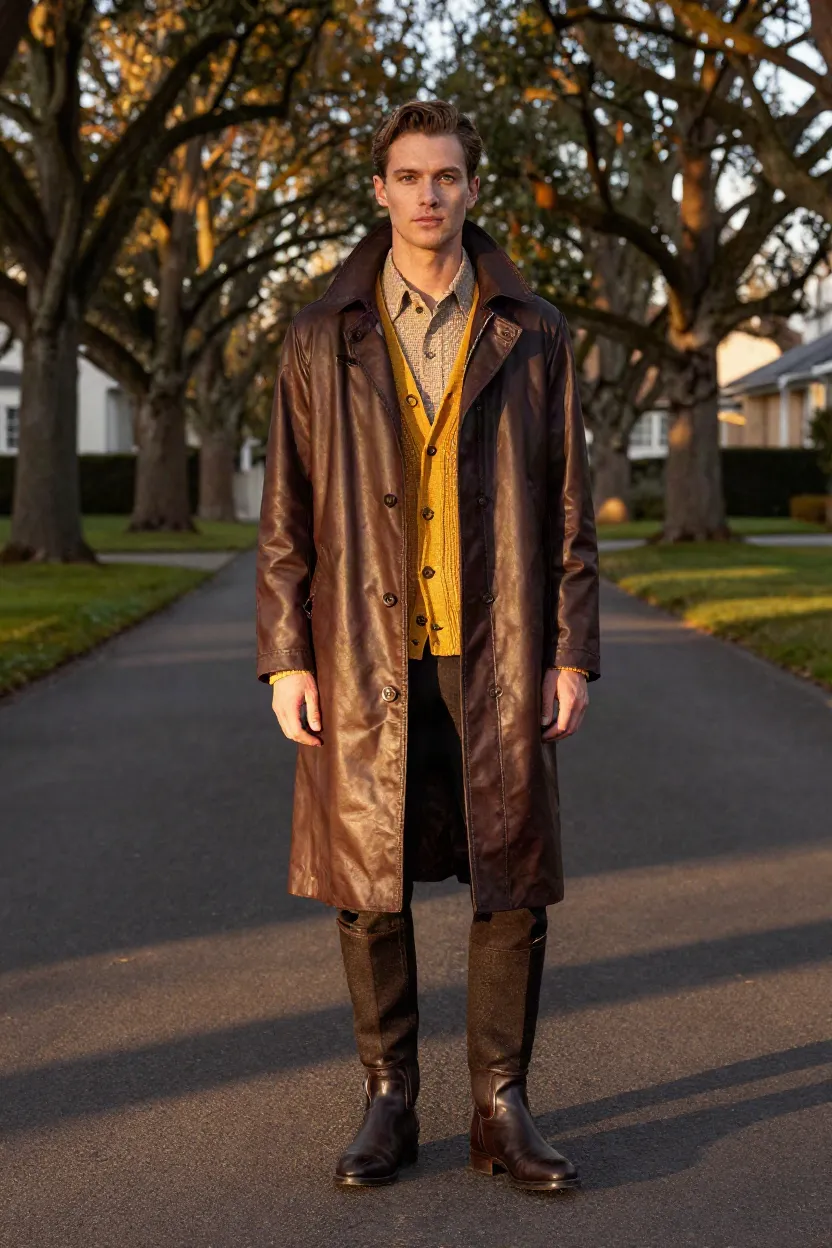
The Estate Walking Silhouette: Longline Dark Brown Riding Coat with Mustard Fisherman Rib
For extended country treks across open fields, an ankle-clearing cut provides dependable weather coverage without adding excessive bulk. Choosing an 8oz deep brown longline riding coat creates a protective outer shell that shields your knees from damp wind and blowing rain. Beneath the waxed canvas, a micro-houndstooth cotton shirt sits close to the skin, topped with an 8-gauge fisherman cardigan look in rich mustard yellow. This intentional splash of mustard knitwear styling cuts through autumnal earth tones, providing substantial core warmth while framing the crisp collar underneath.
Mobility remains essential when you spend hours on foot, which is where functional walking coat heritage designs prove their worth. The coat features a practical 14-inch rear riding vent that allows your legs to move freely over rough terrain without pulling the hem tight against your thighs. Pairing this upper setup with high-density carded twill trousers balances the dense texture of the knitwear, maintaining a clean line that resists trail mud and wind chill.
Fabric Weight Hierarchy Matrix: Calibrating Oiled Canvas, Houndstooth Wool, and Ribbed Knits
Building an effective cold-weather system requires a clear understanding of textile density and functional spacing. When layering wool and waxed cotton, stacking materials haphazardly leads to heat buildup, stiff movement, and moisture accumulation against your skin. A practical tweed and knitwear layering guide relies on balanced thickness across three distinct zones, ensuring your garments work together rather than competing for space.
- Base Layer (180 to 220 gsm): Lightweight merino wool or dense cotton poplin sits directly against your skin, managing moisture vapor transfer while preventing coarse outer fabrics from causing neck and wrist abrasion.
- Mid Layer (320 to 450 gsm): Chunky 5-to-7-gauge ribbed knits or tailored houndstooth wool jackets trap warm air around your torso, retaining thermal mass during resting periods outdoors.
- Outer Shell (6oz to 10oz): Weatherproof oiled canvas or proofed waxed cotton forms a windproof and water-shedding boundary that defends the porous woolen layers underneath.
To keep this system comfortable during active days, ensure your outer shell provides a minimum of 1.5 inches of armhole clearance over tailored sport coats. Maintaining a deliberate half-inch neck collar offset between the shirt and outerwear prevents collar bunching, reduces fabric friction, and establishes a reliable fabric weight hierarchy across variable menswear fabric weights gsm.
Maintenance and Friction Pitfalls: Preserving Wax Proofing and Heritage Tweed
Pairing oiled canvas with raw wool requires proactive care to prevent mutual textile damage over years of field use. Heavy friction between coarse tweed yarns and standard jacket linings can grind down internal seams, while body heat can prompt wax oils to leach into untreated wool fibers. Following consistent waxed jacket maintenance and tweed care guidelines protects both fabrics against premature wear and keeps your outer layers weather-resistant.
- Maintain a 0.5-inch collar standoff: Always ensure your shirt or base layer collar rises slightly above your knitwear and jacket collar to prevent wax transfer to wool and stop neck sweat from eroding the waxed cotton proofing.
- Clean exclusively with cold water: Use a soft sponge dampened with clean cold water to remove dried mud and grime from the shell, steering clear of hot water, detergents, or machine washing that cause wax cracking.
- Apply localized wax rewaxing annually: Inspect the shoulder seams, elbow creases, and pocket edges once a year, working small amounts of heated wax dressing into worn high-friction zones to maintain weatherproofing.
Store your jackets on broad wooden hangers in a cool, well-ventilated space away from direct radiator heat. This simple habit prevents oil migration onto neighboring garments in your wardrobe while supporting long-term heritage garment longevity.
Curated Layering Verdict: Assembling a Functional Autumn Country Wardrobe
Selecting the right seasonal garments comes down to matching your daily activity levels with regional weather demands. Rather than purchasing dozens of niche items at once, building a functional heritage capsule wardrobe starts with a few adaptable core staples that pair naturally across varied damp and dry conditions. This practical British country look summary highlights where to focus your initial efforts for maximum versatility.
- Foundational Core: Secure a versatile 6oz olive waxed jacket alongside a 420 gsm houndstooth wool blazer, giving you two weather-ready outer options that transition smoothly between town errands and country footpaths.
- Neutral Thermal Base: Invest in 5-gauge cable knits in undyed oatmeal or cream, which provide reliable thermal insulation while coordinating easily with earthy greens, rich browns, and deep navy tones.
- Specialized Additions: Introduce heavy longline riding coats or textured multi-gauge cardigans only after your core layers are established, expanding your range for freezing rain and deep winter outings.
When you approach your fall outerwear investment with patience, you can refine your clothing choices around actual comfort and weather demands, securing dependable protection and rustic styling for years to come.