Summary
- The Geometry of Layering: Balancing Autumn Volume and Tone
- Top-to-Bottom Color Echoing Across Primary Separates
- Texture and Proportion Counterweights for Multi-Piece Ensembles
- Hemline Clearance and Color Ratio Specification Matrix
- Proportion Distortion Traps and Color Disconnection Mistakes
- The Five-Minute Sandwich Formula for Daily Rotation
The Geometry of Layering: Balancing Autumn Volume and Tone
Adding cold-weather insulation often risks creating a shapeless silhouette as heavier textiles stack up. By adopting the sandwich rule fashion framework, you establish an intentional visual frame that matches tones at your head and feet around a lighter center. This fall layering guide provides reliable formulas, practical hemline clearances, and balanced autumn outfit proportions to give your daily cold-weather rotation clear structural balance.
Top-to-Bottom Color Echoing Across Primary Separates
When autumn temperatures prompt thicker weaves, vertical color balance keeps heavy garments from overwhelming your natural frame. Matching your uppermost layer directly to your footwear establishes an intentional boundary that guides the eye smoothly through your midsection.
- Select your foundational outer tone by pairing an espresso overcoat or dark cap with matching leather shoes to bookend the silhouette.
- Fill the interior column with high-contrast, lighter separates such as cream wool trousers or an ivory knit to create a defined central core.
- Assess the full vertical line in a mirror to confirm that the dark bookends stabilize the sandwich outfit formula without visually dragging down your proportions.
These core fall styling principles ensure that bulky seasonal fabrics maintain crisp visual symmetry without creating disproportionate weight at either end of your torso.
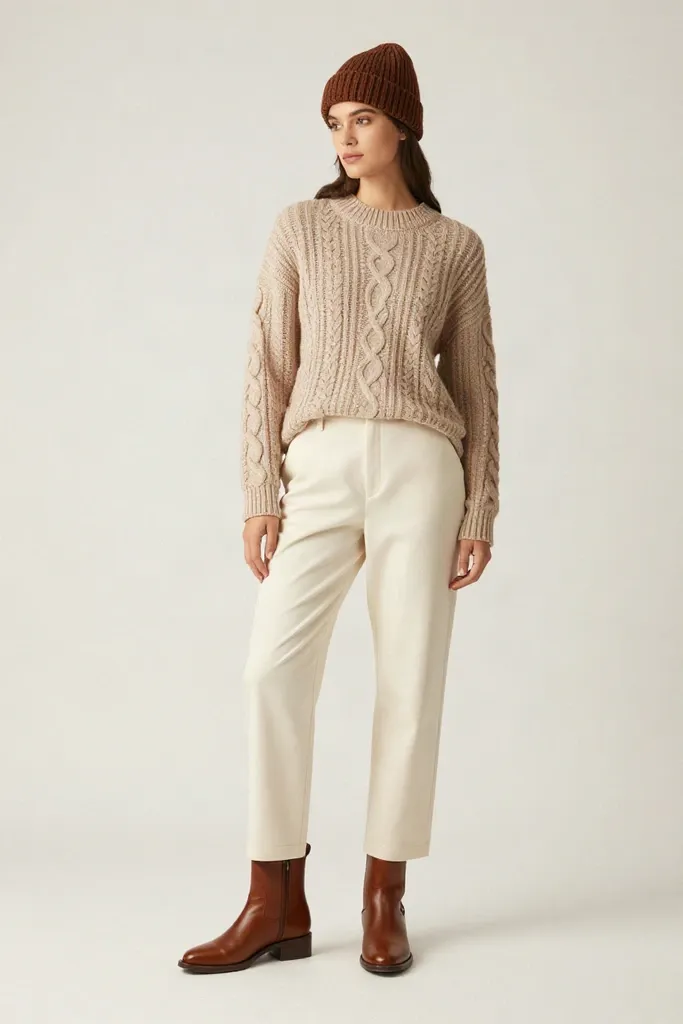
The Classic Knit Beanie and Boot Tonal Bookend
Grounding an ensemble with synchronized headwear and footwear provides a dependable template for everyday cold-weather dressing. Anchoring the crown and base in identical depth gives your neutral fall layering a clear sense of purpose.
- Pair a chocolate brown ribbed wool beanie with matching burnished leather Chelsea boots to frame the overall build cleanly.
- Introduce an oatmeal crewneck sweater over high-waisted cream wool trousers, using the bright interior column to pull the gaze smoothly downward.
- Maintain a 1-inch trouser cuff clearance directly above the boot collar to preserve clean ankle definition and prevent messy hem pooling.
- Match the color temperature across both leather and knitwear, avoiding boots with warm cognac undertones that clash against a cool espresso cap.
This balanced sandwich rule outfit prevents heavy winter textures from gathering around the hemline, ensuring that your brown beanie styling and chocolate boot outfit work in tandem rather than competing for visual focus.
Outerwear Sandwiching with Trench Coat and Tonal Loafers
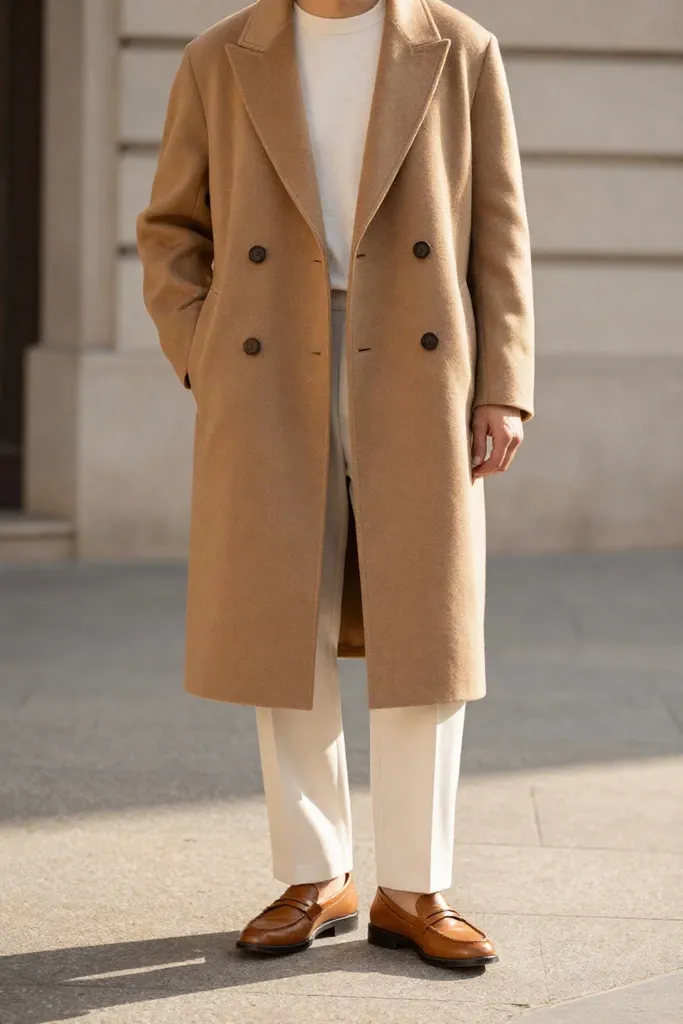
Coordinating longline tailoring with tailored shoes creates an elongated silhouette that streamlines your frame without requiring complex color palettes. In a classic camel coat outfit, pairing a structured double-breasted coat with matched camel horsebit loafers establishes an exterior shell that brackets your torso. To maximize this sandwiching rule styling, keep the core inner layer entirely monochrome with a finely knit ecru jersey top and crisp off-white tailored trousers, allowing the lighter column to lengthen your frame.
Proportion benchmarks remain vital when working with heavier fabrics. Aim for an outer coat hemline of approximately 44 inches so the fabric falls 4 inches below the knee, while leaving 3 inches of ankle visible above your slip-on footwear. The tactile contrast between brushed wool outerwear and smooth boxcalf leather adds crisp definition to the fall loafer outfit, while balanced fabric weights stop unwanted bunching around the hip pockets as you walk.
Belt and Footwear Anchoring with Contrast Separates
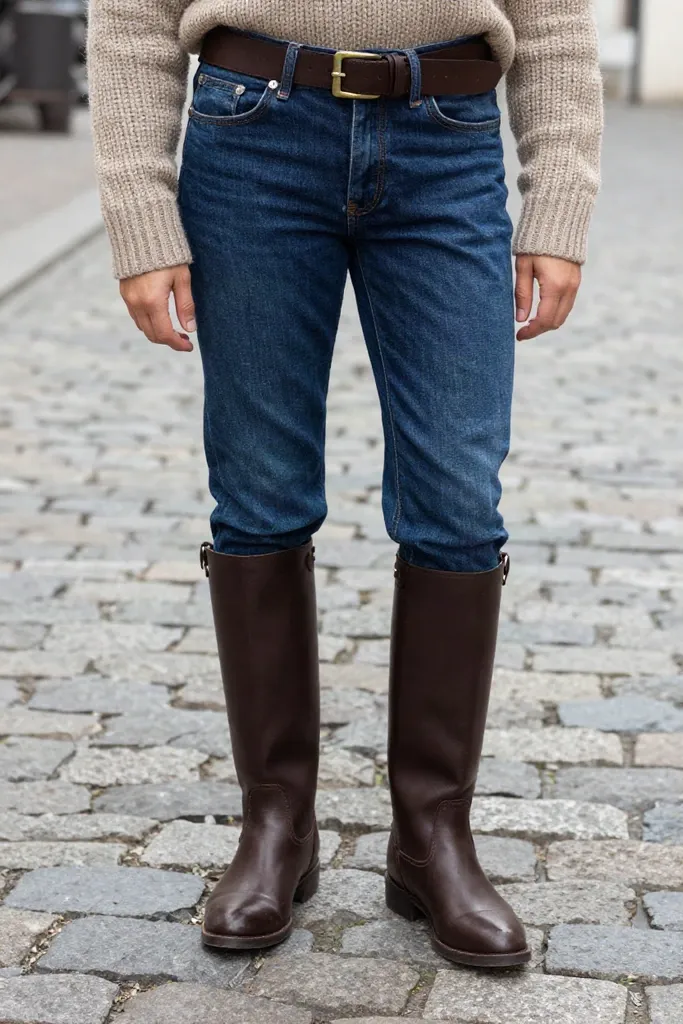
When your daily rotation shifts toward heavier knits, smaller leather accessories can create the same framing effect as a full-length coat. Anchoring mid-tone garments with coordinated hardware and rich hide tones gives structure to casual denim without adding extra bulk around your shoulders. In this riding boot outfit formula, rich espresso leather secures both your waistline and lower legs, framing a substantial oatmeal fisherman knit styling alongside classic mid-wash jeans.
- Select a 1.25-inch belt strap width that rests flush against your denim waistband, ensuring the buckle sits flat beneath the heavy ribbed hem of your sweater without buckling or digging into your waist.
- Tuck your straight-leg denim smoothly inside tall espresso riding boots, keeping the calf profile neat so the dark leather at the hem balances the dark strap at your midsection.
- Maintain consistent surface sheens across both pieces, as pairing a glossy patent belt with matte pull-up leather or brushed suede creates an uneven texture clash across the outfit.
Precise belt and boot matching establishes a quiet boundary for fall denim layering, allowing textured wool and casual cotton to meet cleanly at the center of your silhouette.
Scarf and Sock Framing for Casual Weekend Tailoring
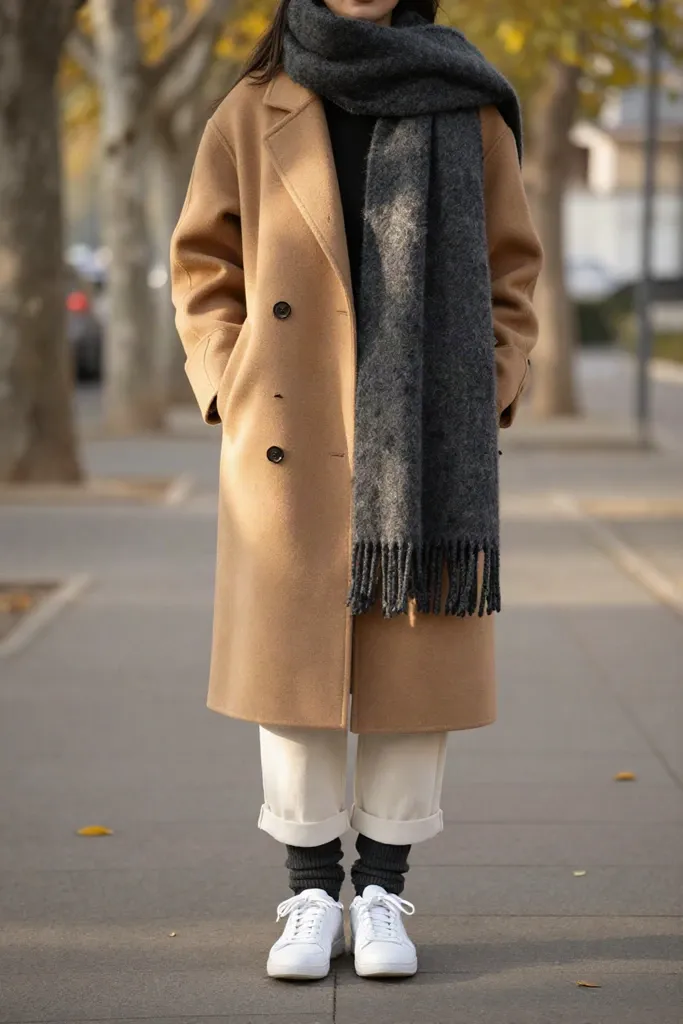
Weekend tailoring benefits from softer boundaries that bring relaxed shapes into clean visual focus. By positioning deep charcoal accents at your neckline and ankles, you can let an open camel coat and cream wide-leg track pants flow easily down the body. This scarf and sock sandwich introduces subtle warmth while keeping a relaxed fall outfit feeling grounded and deliberate.
- Drape an oversized charcoal alpaca wrap around your neck, using a soft garment brush along the nap beforehand to remove loose fiber tufts that might otherwise cling to your coat lining.
- Position the hem of your cream trousers so they leave an intentional 2-inch gap above your shoe collars, ensuring wide leg trousers sneakers pairings display the charcoal ribbed knit clearly rather than swallowing your ankles.
- Anchor the low profile with clean retro trainers, allowing the textured charcoal crew socks to bridge the transition between relaxed footwear and loose tailoring.
Mindful charcoal scarf styling gives soft weekend pieces a defined perimeter, proving that relaxed layers can maintain purposeful balance throughout cool mornings.
Texture and Proportion Counterweights for Multi-Piece Ensembles
A successful palette repetition relies heavily on how different fabric weights support one another across your torso and legs. When building multi-garment outfits, pairing identical textures at both ends can make an ensemble feel static or overly calculated. You achieve a much richer balance by treating surface characteristics as counterweights, setting dense outer weaves against fluid base garments so the overall shape maintains lively movement as you walk.
Solid footwear and structured coats provide firm outer boundaries, while supple interior fabrics preserve comfort beneath your collar. Through thoughtful tactile fabric layering, a heavyweight melton shell and sturdy leather soles frame light silk blouses or fine-gauge knits without crushing their natural drape. Following these clear proportion styling rules brings cohesion to autumn wardrobe coordination, turning contrasting fabric densities into a balanced, functional rotation.
Leather Jacket and Moto Boot Envelope with Soft Knit Core
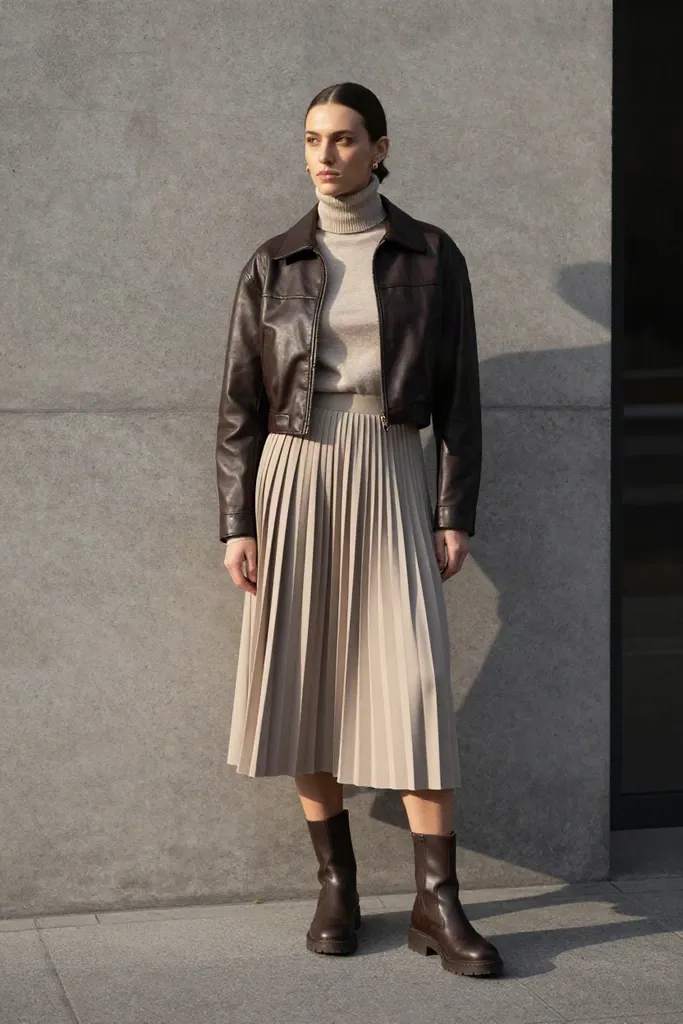
Framing an outfit with rugged hides creates an assertive perimeter that needs a delicate interior to avoid looking rigid. When you style a cropped boxy biker jacket with heavy combat soles, a rich chocolate leather combo establishes sturdy bookends at your shoulders and feet. Softening that structure requires fluid mid-layers, such as a fine oatmeal merino turtleneck paired with a sand pleated skirt crafted from 19-millimeter silk twill or fine wool crepe. Heavy twills or stiff cottons will fight the movement of your boots, whereas supple silks drape smoothly between the solid leather pieces.
Ensure the hem of your midi skirt clears the top of the boot shaft by at least 3 inches, preventing delicate pleated fabric from catching against thick ankle collars and rough metal hardware.
Turtleneck and Trouser Sandwiching Beneath a Contrast Cardigan
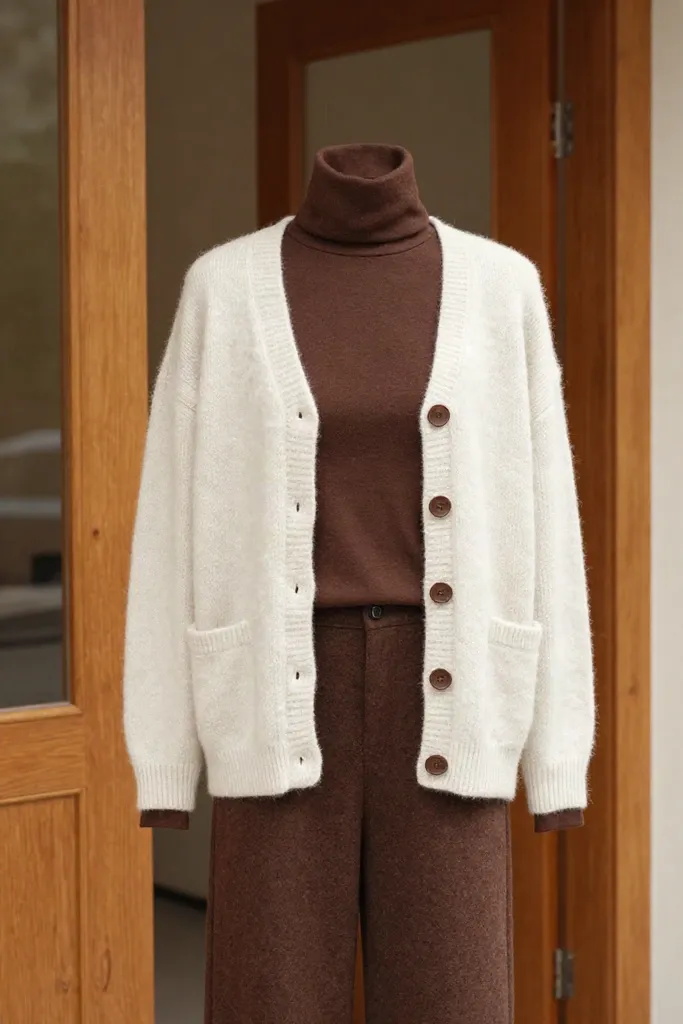
When you reverse the traditional layering formula, working with an espresso monochrome base creates a unified vertical core that streamlines your frame before adding outer pieces. When testing proportions on the dress form, running the same dark tone from the neckline to the trouser hem visually lengthens the body by 2 to 3 inches optically. Layering an open, cream boucle cardigan over this dark base introduces textural warmth while using the inverted sandwich rule to frame the darker interior column.
- Select an ultra-fine knit under 200 grams per square meter for your inner turtleneck, ensuring the fine wool lays smooth without bunching under heavy boucle fabrics.
- Keep the knit collar snug against your neck so the fold sits neatly beneath the rounded sweater neckline without crowding the throat.
- Rely on the column dressing technique with matching espresso wool trousers to establish a continuous central tone while open cardigan panels add soft exterior contrast.
- Ground the hemlines with espresso leather footwear that directly matches the trouser tone, anchoring the entire vertical line from top to bottom.
This approach gives successful boucle cardigan styling a clean, tailored finish that balances heavy knit textures without adding unwanted bulk around your torso.
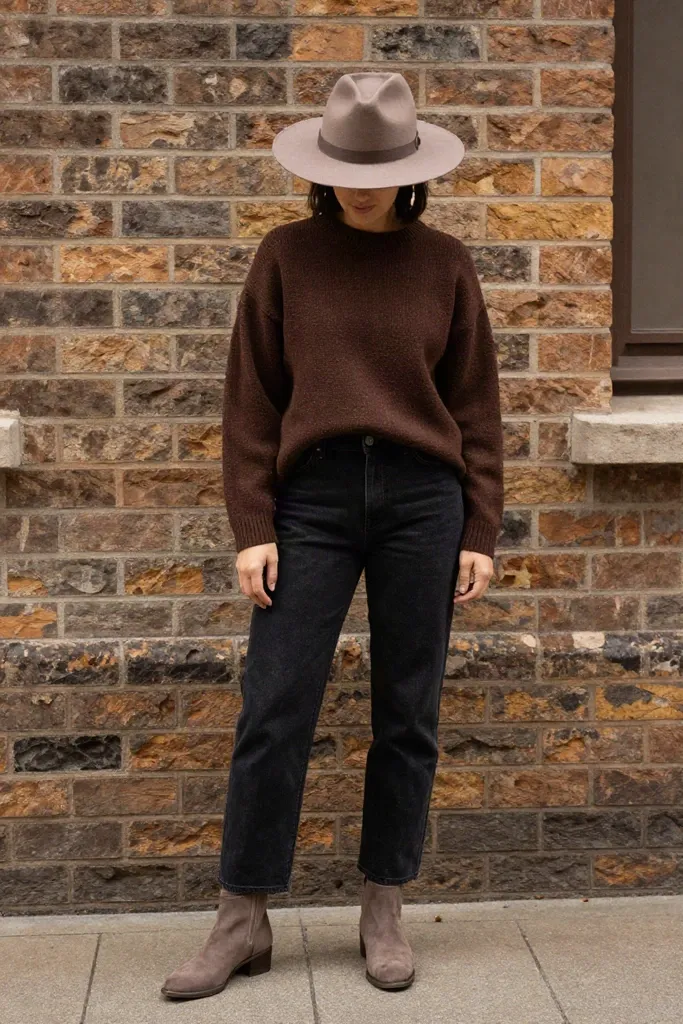
Wool Fedora and Suede Ankle Boot Framing with Denim
Framing a casual outfit with headwear and footwear creates visual symmetry through matching matte textures. Pairing a structured taupe wool fedora with taupe suede block-heel ankle boots provides soft upper and lower boundaries around a deep chocolate brown crewneck sweater and washed black denim. To assemble this balanced fall hat outfit without clumsy proportions, follow these practical steps.
- Treat your taupe suede footwear with two light coats of a fluoropolymer water-repellent spray prior to your first wear, allowing the nap to dry completely so street moisture and road salt cannot leave permanent watermarks.
- Tuck your chocolate brown sweater cleanly into mid-rise washed black jeans, keeping the waistline defined to separate the dark top from the denim wash.
- Adjust your straight-leg denim cuffs so the bottom hem breaks exactly 0.5 inches over the ankle boot vamp, creating a clean drop that prevents heavy denim stacking around the boot shaft.
Coordinating the felt brim with textured suede boot styling establishes balanced earthy accents that pull your core separates together naturally.
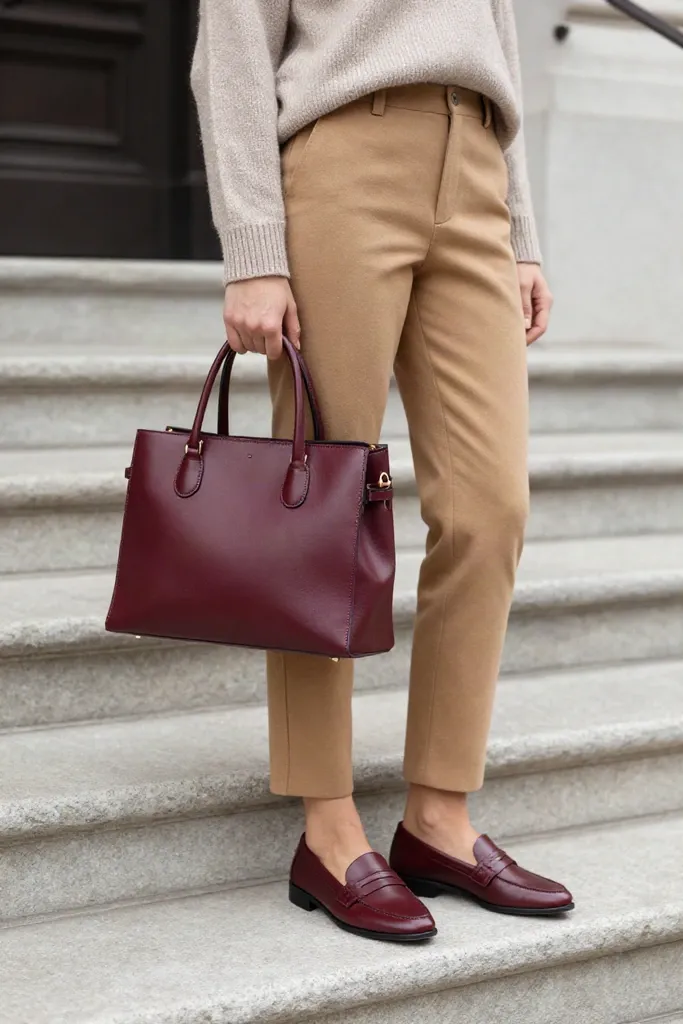
Structured Handbag and Loafer Synchronization Across Neutral Layers
You do not need headwear to establish visual equilibrium when strategic leather goods serve as your framing points. Pairing a structured oxblood top-handle leather bag carried at the hip with matching oxblood leather penny loafers creates rich focal anchors around lighter body layers. When worn alongside an oatmeal ribbed mock-neck knit and fluid camel pleated wool trousers, this autumn accessory sandwich introduces deep, polished contrast that draws the eye across the entire ensemble without competing with the soft knitwear.
Proportion control remains critical when executing this handbag shoe matching strategy alongside wide-leg tailoring. Select a handbag measuring under 11 inches in width, which prevents bulky leather hardware from overwhelming a moderate frame. Pay close attention to leather dye undertones, as pairing a cool, purple-cast oxblood bag with warm, orange-cast cognac loafers creates an unresolved color clash that disrupts the clean harmony of your neutral camel trousers styling.
Hemline Clearance and Color Ratio Specification Matrix
Mastering multi-piece outfits requires clear technical parameters rather than guesswork. Relying on an organized layering proportion matrix allows you to maintain clean vertical lines, regulate thermal bulk, and balance contrasting tones across every garment layer.
- Follow the 60-30-10 color distribution ratio by reserving 60 percent of your visual area for neutral core separates, 30 percent for matching bookend pieces like outerwear or footwear, and 10 percent for focused metallic jewelry or leather accents.
- Maintain practical hemline clearance guidelines by leaving 1 to 2 inches of boot shaft visible beneath cropped trousers, while ensuring midi coats extend 3 to 4 inches below inner skirts to prevent clumsy hemline crowding.
- Balance your fabric density by maintaining a balanced garment weight distribution, pairing lightweight base layers around 180 grams per square meter beneath outerwear fabrics that weigh up to 450 grams per square meter.
Applying these tactile benchmarks ensures your cold-weather combinations retain structured ease and deliberate physical balance throughout daily rotation.
Proportion Distortion Traps and Color Disconnection Mistakes
Even with balanced fabric weights, minor oversights can derail your overall outfit balance. Four distinct failure points repeatedly compromise sandwich styling during everyday wear. The first common pitfall centers on undertone clashes, where warm caramel headwear fights cool taupe boots instead of framing the neutral midsection. The second breakdown occurs with visual truncation, especially when floor-pooling trousers spill over the vamp and completely obscure your bottom anchor. When tackling fall outfit troubleshooting on the rack, I often run a quick hand over the shoulder line to catch the third major trap: bulk accumulation from chunky knits stuffed beneath rigid outerwear, which forces the shoulder seams to flare awkwardly outward. Finally, texture competition arises when high-gloss patent leather clashes against rugged shearling, creating conflicting focal points that distract the eye.
Each of these layering mistakes to avoid responds to a direct diagnostic fix. For color temperature disconnects, follow strict undertone matching rules by pairing warm honey tones exclusively with cognac or espresso leathers, while reserving slate and taupe bases for cool gray knits. To fix trouser truncation and eliminate proportion styling errors, hem your pants to break cleanly right at the ankle bone, leaving at least an inch of your boot shaft clearly visible. If thick knitwear pulls against your jacket armholes, swap the bulky sweater for a fine-gauge ribbed wool top that preserves the clean sleeve line without binding your movement. Lastly, balance contrasting tactile finishes by pairing matte outerwear with brushed leather accessories, ensuring your top and bottom bookends cooperate rather than compete for visual focus.
The Five-Minute Sandwich Formula for Daily Rotation
Getting dressed during cooler weather becomes simple and reliable when you boil the sandwich concept down to three deliberate steps. You do not need specialized shopping trips to achieve balanced tonal symmetry, as this daily styling framework works effectively with the core garments already hanging in your closet. By treating your existing staples as interchangeable modules, you can streamline your morning outfit routine and ensure comfortable physical mobility throughout the day.
- Select your footwear anchor first. Pull out the leather loafers, rugged boots, or burnished oxfords that match the practical demands of your day, establishing the foundational tone and weight for the entire look.
- Mirror that base shade on your upper body. Reach for a matching wool beanie, an oversized ribbed scarf, or an open jacket that echoes the exact leather or wool color of your shoes, creating your framing bookends.
- Fill the center with neutral mid-weight separates. Complete the capsule wardrobe sandwich by slipping into oatmeal trousers, ecru denim, or a cream knit that creates clean visual separation between your outer bookends.
This straightforward sequence eliminates morning hesitation while keeping your proportions grounded and clean. As long as your top and bottom anchors share a similar color depth and your center pieces provide clean tonal contrast, your everyday combinations will feel balanced and comfortable from morning to evening.